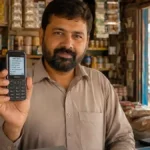
A colleague of mine lost his job during a difficult economic period a few years ago. He had been earning a comfortable salary, living a reasonable lifestyle, and had never felt the need to think too hard about savings because his income always covered his expenses. When the job loss happened, he had less than one month of expenses saved. Within six weeks, he was borrowing from relatives to cover rent and utility bills, something he had never imagined himself doing. In this article, I will explain to you how to build an emergency fund in Pakistan.
What struck me most about his situation was not that he lost his job, since that can happen to anyone. It was that he had a stable income for years and never built the one financial buffer that would have completely changed how that crisis unfolded. An emergency fund would not have prevented the job loss, but it would have given him three to six months of breathing room to find the right next opportunity without financial panic forcing rushed, poor decisions.
Building an emergency fund in Pakistan is, without exaggeration, the single most important financial step anyone can take before doing anything else with their money, including investing. This guide walks through exactly how much you need, where to keep it, and how to actually build it given the realities of Pakistani income patterns and inflation.
Table of Contents
What is an Emergency Fund and Why Does It Matter So Much?
An emergency fund is money set aside specifically to cover unexpected expenses or income disruptions: a job loss, a medical emergency, an urgent home or vehicle repair, or any sudden cost that your regular monthly budget cannot absorb.
The purpose of this fund is not to grow your wealth. It is to protect everything else in your financial life. Without an emergency fund, even minor financial advice like “stop using your credit card” or “start investing for retirement” become impossible to follow consistently, because every unexpected expense forces you back into debt or forces you to liquidate investments at the worst possible time.
In the Pakistani context specifically, emergency funds matter even more than in many other countries for several reasons. Formal social safety nets and unemployment insurance are limited compared to many developed economies, meaning individuals bear most of the responsibility for weathering income disruptions themselves. Healthcare costs, particularly for serious medical issues, can be substantial and largely out of pocket for most families without comprehensive insurance. And economic volatility, including currency depreciation, inflation spikes, and periodic economic slowdowns, makes income and cost stability less predictable than in more stable economies.
An emergency fund is the financial buffer that allows you to absorb these shocks without derailing your broader financial life.
How Much Should Your Emergency Fund Actually Be?
The standard financial guidance is to save three to six months of essential living expenses. For Pakistani households, the right number within that range depends on your specific circumstances.
Three months is appropriate if you have a stable job with low risk of sudden termination, a dual-income household where a second income could cover essentials if one income stopped, no dependents relying solely on your income, or other accessible assets that could be liquidated relatively quickly if genuinely needed.
Six months or more is appropriate if you are the sole income earner for your household, you work in an industry or role with higher job insecurity, you are self-employed or a freelancer with variable monthly income, you have dependents including children, elderly parents, or family members who rely on your support, or you have existing health conditions that could require unplanned medical spending.
The calculation itself is straightforward. List your essential monthly expenses: rent or mortgage payments, utilities, groceries, transportation, school fees, minimum debt payments, and any other genuinely non-negotiable costs. Do not include discretionary spending like entertainment, dining out, or shopping in this calculation, since an emergency fund is meant to cover survival-level expenses, not your normal lifestyle.
If your essential monthly expenses total PKR 80,000, a three-month emergency fund target is PKR 240,000 and a six-month target is PKR 480,000. These numbers can feel intimidating when you are starting from zero, which is exactly why the right approach is building incrementally rather than waiting until you can save the full amount at once.
Where Should You Keep Your Emergency Fund?
This is a question many Pakistanis get wrong, often by either keeping the money too inaccessible or by exposing it to risk it should never carry.
The defining characteristics your emergency fund needs are liquidity, meaning you can access it within a day or two without penalty, and safety, meaning the value is not exposed to market volatility. Growth potential is a distant third priority. An emergency fund is not the place to chase the highest possible return.
Regular Savings Account
A standard savings account at any Pakistani bank is the most straightforward option. Your money is accessible immediately through ATM withdrawal, mobile banking transfer, or branch withdrawal, and you earn a modest profit rate on the balance. The downside is that standard savings account rates are typically lower than other liquid options.
Money Market Mutual Funds
Money market mutual funds from SECP-regulated Asset Management Companies typically offer better returns than a standard savings account while maintaining very high liquidity, often allowing redemption within one to two business days. For a significant portion of your emergency fund, particularly the part beyond your immediate one-month buffer, a money market fund is genuinely a smarter home than a basic savings account.
Basic Banking Account or Asaan Account
For those building an emergency fund from a lower starting income, a Basic Banking Account or Asaan Account, both of which have no minimum balance requirement, removes the risk of being penalized for a balance that fluctuates as you build your fund gradually.
What to Avoid
Do not put your emergency fund in fixed deposits with long lock-in periods, since premature encashment penalties defeat the purpose of having quick access when you need it. Do not invest your emergency fund in equity mutual funds, individual stocks, or any volatile asset class. If a market downturn coincides with your emergency, you could be forced to sell at a significant loss exactly when you need the money most. Do not keep large amounts of cash at home, where it is vulnerable to theft, loss, and the silent erosion of inflation with zero offsetting return.
A practical structure many Pakistani financial planners recommend is splitting your emergency fund: one month of expenses in an instantly accessible savings account for true immediate needs, and the remaining two to five months in a money market fund that offers slightly better returns while still being accessible within one to two business days.
How to Actually Build Your Emergency Fund: A Step-by-Step Approach
Knowing the target amount is one thing. Actually accumulating it, particularly against the backdrop of Pakistan’s cost of living pressures, requires a deliberate and realistic plan.
Step 1: Calculate your actual target number
Using the method described above, calculate your specific three to six month target based on your essential expenses and personal risk factors. Write this number down. Having a concrete target transforms an abstract goal into something measurable.
Step 2: Start with a smaller milestone
Rather than feeling overwhelmed by a target of PKR 480,000, break it into smaller milestones. A first milestone of PKR 50,000, representing perhaps two to three weeks of expenses, is achievable for most people within a few months and creates the psychological momentum needed to continue. Reaching one month of expenses saved is the next milestone, followed by three months, and finally your full target.
Step 3: Open a separate account specifically for this purpose
Keeping your emergency fund mixed in with your regular spending account makes it too easy to dip into for non-emergencies. Open a dedicated savings account or money market fund account specifically labeled and used only for this purpose. The psychological separation matters more than it might seem. Money that is “out of sight” in a dedicated account is significantly less likely to be spent impulsively.
Step 4: Automate a fixed monthly contribution
Set up a standing instruction or automatic transfer that moves a fixed amount from your salary account to your emergency fund account on the day your salary is credited, before you have a chance to spend it elsewhere. Even a modest amount, PKR 3,000 to PKR 10,000 monthly depending on your income, builds meaningfully over a year if it happens automatically and consistently.
Step 5: Direct windfalls toward your fund until it is complete
Bonuses, tax refunds, Eidi, freelance project payments beyond your regular income, or any other unplanned income should be directed substantially toward your emergency fund until you reach your target. These windfalls accelerate your progress significantly faster than relying on monthly contributions alone.
Step 6: Cut specific discretionary expenses temporarily
Building an emergency fund quickly often requires temporarily reducing specific discretionary spending categories. Identifying two or three areas, whether dining out, subscription services, or non-essential shopping, and redirecting that spending toward your emergency fund for a defined period of six to twelve months can dramatically accelerate your timeline without requiring permanent lifestyle sacrifice.
Step 7: Resist the temptation to invest before your fund is complete
This is genuinely one of the hardest disciplines for financially motivated people. The pull to start investing in stocks or mutual funds before your emergency fund is complete is strong, particularly when you see attractive returns being discussed. But investing before you have emergency liquidity means that any unexpected expense forces you to either go into debt or sell investments at an inopportune time, both of which are worse outcomes than temporarily delaying your investment timeline by a few months while you finish building your safety net.
Special Considerations for Freelancers and Self-Employed Pakistanis
If you are a freelancer or business owner with variable monthly income, your emergency fund strategy needs some specific adjustments compared to someone with a stable salary.
Your target should generally be on the higher end of the range, six months or more of essential expenses, since income variability means a slow month could compound with an emergency in ways that a stable salary earner does not face.
Rather than a fixed monthly contribution, consider a percentage-based approach. Setting aside a fixed percentage, perhaps 15% to 20%, of every payment you receive into your emergency fund until you reach your target ensures your savings rate scales naturally with your variable income rather than being a fixed burden during slower months.
During particularly strong income months, consider directing a larger percentage toward your emergency fund to build buffer faster, recognizing that freelance and business income can be unpredictable in both directions.
Common Mistakes Pakistanis Make When Building Emergency Funds
Treating investments as their emergency fund. Equity mutual funds and PSX stocks are not appropriate emergency fund vehicles because their value can be significantly lower exactly when broader economic conditions are creating the emergency that requires you to access the money.
Dipping into the fund for non-emergencies. Once an emergency fund exists, it can be tempting to use it for a good opportunity, a sale, or a want that feels urgent but is not a true emergency. Defining clearly in advance what qualifies as an emergency, genuine job loss, medical necessity, or critical unplanned expense, and holding that line firmly preserves the fund’s actual purpose.
Stopping contributions once a small cushion is built. Reaching PKR 50,000 or one month of expenses feels like meaningful progress, and it is, but stopping there leaves you exposed to anything beyond a brief disruption. Continue contributing until you reach your full three to six month target.
Not replenishing the fund after using it. If you do need to use your emergency fund for a genuine emergency, treat replenishing it as an immediate priority once your situation stabilizes, rather than letting the fund remain depleted indefinitely.
Keeping it too liquid and earning nothing, or too illiquid and inaccessible. Both extremes create problems. A reasonable balance between a basic savings account for immediate access and a money market fund for the bulk of the balance, as described earlier, avoids both pitfalls.
Why This Matters More Than Almost Any Other Financial Decision
It is worth being direct about why an emergency fund deserves priority over almost every other financial goal, including investing.
Every investment strategy discussed elsewhere in this series, whether mutual funds, PSX stocks, gold, or real estate, works best when you can stay invested through market volatility without being forced to sell at a bad time. The single most common reason investors are forced to sell at exactly the wrong moment is an unexpected need for cash that they had no other way to cover. An emergency fund removes that risk entirely, which means it actually protects and improves the performance of every other investment decision you make once you start investing.
Beyond the purely financial logic, there is a genuine psychological benefit. People with an adequate emergency fund report significantly less financial anxiety and make calmer, more rational decisions during genuine crises. The colleague who lost his job and had no buffer made several rushed financial decisions in the following months, including taking on debt at unfavorable terms, simply because he had no time to think clearly. An emergency fund buys you the most valuable resource during any crisis: time to make a good decision rather than a desperate one.
Conclusion
Building an emergency fund in Pakistan is not glamorous. It does not generate exciting returns or interesting stories the way a winning stock investment might. But it is the financial decision that protects every other financial decision you make, and its absence is the single most common reason that otherwise financially capable people end up in genuine distress when something unexpected happens.
Start with a realistic target based on your actual essential expenses. Open a dedicated account. Automate a contribution that fits your budget without straining it. Direct windfalls toward completing the fund faster. And resist building your investment portfolio until this foundation is genuinely in place.
The peace of mind that comes from knowing you can absorb a genuine financial shock without panic, without high-interest debt, and without disrupting your longer-term investment plans is worth far more than the modest return your emergency fund earns while it sits there waiting, hopefully, to never be needed.