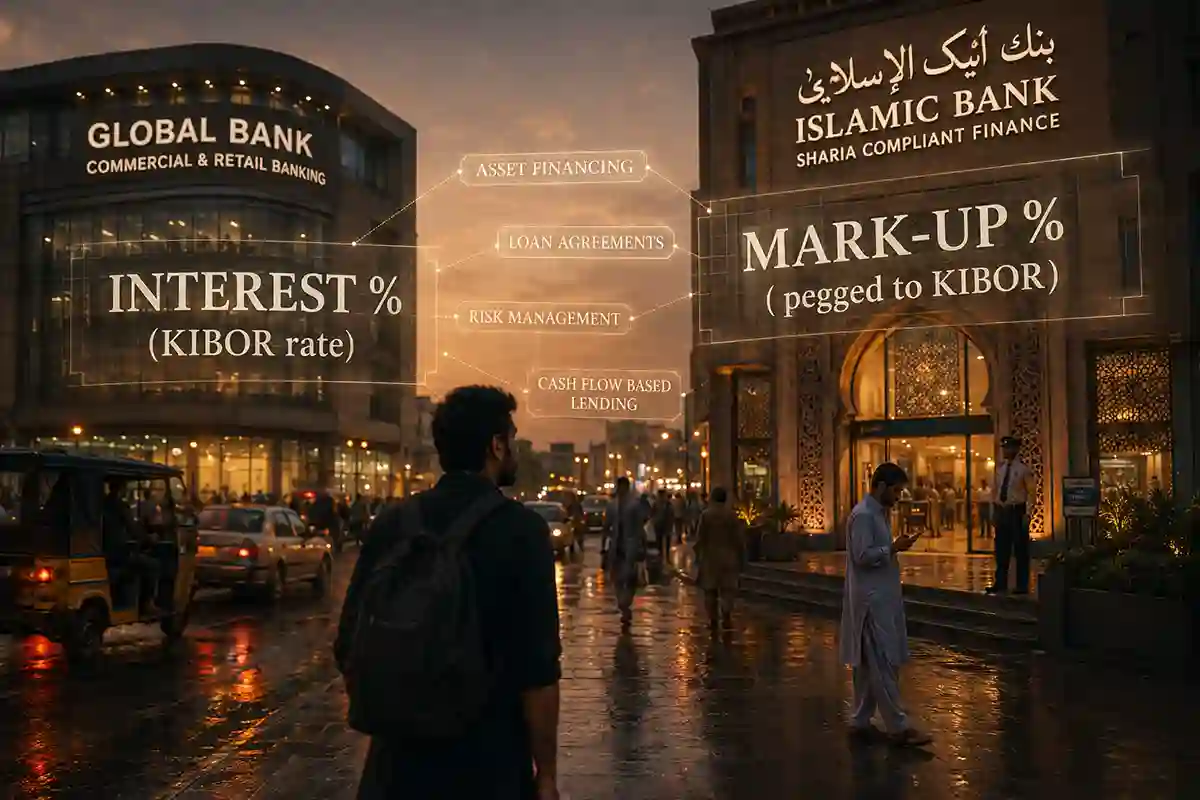
For years, I walked past the gleaming glass facades of Islamic banks with a sense of pride. Like millions of others who wanted to keep their finances aligned with their faith, the shift away from traditional, interest-based banking felt like a massive win. I remember opening my first account, genuinely believing I was stepping into a completely different financial ecosystem one built on true partnership, shared risk, and ethical profit.
But then I actually started using the system for more than just a basic checking account.
A few years ago, I decided to look into financing a car and eventually a small business venture. That is when the rosy picture started to blur, and I had to face a frustrating reality. When you sit down across from a loan officer or a “relationship manager,” as they prefer to call them and start crunching the numbers, you quickly realize something strange. The math looks identical to conventional banking. They just call it a “mark-up” instead of interest.
The biggest lesson I learned is that the biggest illusion in Islamic banking is the idea of shared risk. In theory, Islamic finance is supposed to be about Mudarabah or Musharakah concepts where the bank and the customer pool their money, share the profits, and crucially, share the losses. If my business ventures took a hit, the bank was supposed to ride out the storm with me.
In practice? It doesn’t work that way. When I looked into the fine print of asset financing, the bank effectively buys the asset and leases or sells it back to you at a premium. If something goes wrong, the safety nets protect the bank, not you. They have collateral, guarantees, and legal recourse that ensure their profit margin remains completely insulated.
The real eye-opener came when I looked at how they calculate these mark-ups. If these banks are operating on an independent, ethical system based on real-world trade, their pricing shouldn’t care about what the central bank is doing with interest rates. Yet, every time the central bank hikes the benchmark interest rate to fight inflation, the cost of Islamic “financing” shoots up right alongside it. They peg their profit rates directly to conventional interest benchmarks like KIBOR. It feels less like a brand-new ethical financial system and more like the old system wearing a different outfit.
I also noticed this discrepancy on the saving side. When you deposit your hard-earned money into a Sharia-compliant savings account, you are told you are entering a profit-sharing pool. But when inflation skyrocketed and conventional banks were forced by the central bank to offer massive interest returns to savers, my Islamic savings account returns lagged way behind. The banks were making record profits by putting funds into government papers, but very little of that windfall actually trickled down to the average depositor.
If you are looking to navigate this space, don’t make the mistake I did by letting religious sentiment blind you to the financial reality. You have to treat it with the same sharp scrutiny you would give any secular financial institution.
First, read the profit-distribution weightages. Islamic banks publish these every month, and they dictate exactly how much of the profit pie you actually get compared to the bank. Most people ignore these documents, but they are crucial to understanding if you are getting shortchanged. Second, don’t blindly accept the “fixed” nature of Islamic corporate contracts; ask tough questions about what happens in default scenarios or early repayments, because the hidden penalties can sometimes be steeper than conventional insurance or late fees.
Ultimately, Islamic banking fills a massive emotional and spiritual need, which is why it continues to grow at a breakneck pace. But until these institutions break away from pegging their profits to central bank interest rates and start truly sharing the risks of everyday businesses, they will remain a mirror image of the very system they claim to replace.