A friend of mine got his first credit card in Pakistan three years ago and treated it exactly the way most first-time cardholders do: as an extension of his income rather than a short-term borrowing tool. He spent freely, paid only the minimum due each month because the bank made that option very visible and very easy, and watched his outstanding balance grow steadily while assuming the rewards points he was accumulating were somehow making up for it. Here you will learn how credit cards work in Pakistan.
Eighteen months later, he had a balance of PKR 85,000 on a card with a 42% annual markup rate. The minimum payment was barely covering the monthly interest charge, meaning his actual debt was barely shrinking. He had earned enough reward points for a modest voucher. He had paid tens of thousands of rupees in interest that wiped out any reward value many times over.
He is not unusual. This pattern plays out constantly among credit card users in Pakistan who were never clearly explained how credit cards actually work, what they actually cost when used incorrectly, and what specific habits make the difference between a card being a genuinely useful financial tool and a slow financial drain.
In 2026, Pakistan’s credit card market has undergone a significant transformation, with banks upgrading rewards programmes, launching contactless NFC payment support at most POS terminals, and introducing genuinely competitive Islamic credit card products. But the fundamentals of how credit cards work and how to use them wisely have not changed. This guide covers both.
Table of Contents
How Credit Cards Work in Pakistan
A credit card gives you access to a revolving line of credit up to a defined limit. Every time you use it to make a purchase, you are borrowing that amount from the bank. The bank pays the merchant immediately on your behalf. You then owe the bank that amount.
Every month, you receive a statement showing your total outstanding balance and a minimum payment amount. You have three options: pay the full balance, pay the minimum, or pay any amount in between.
This is where the critical distinction lies.
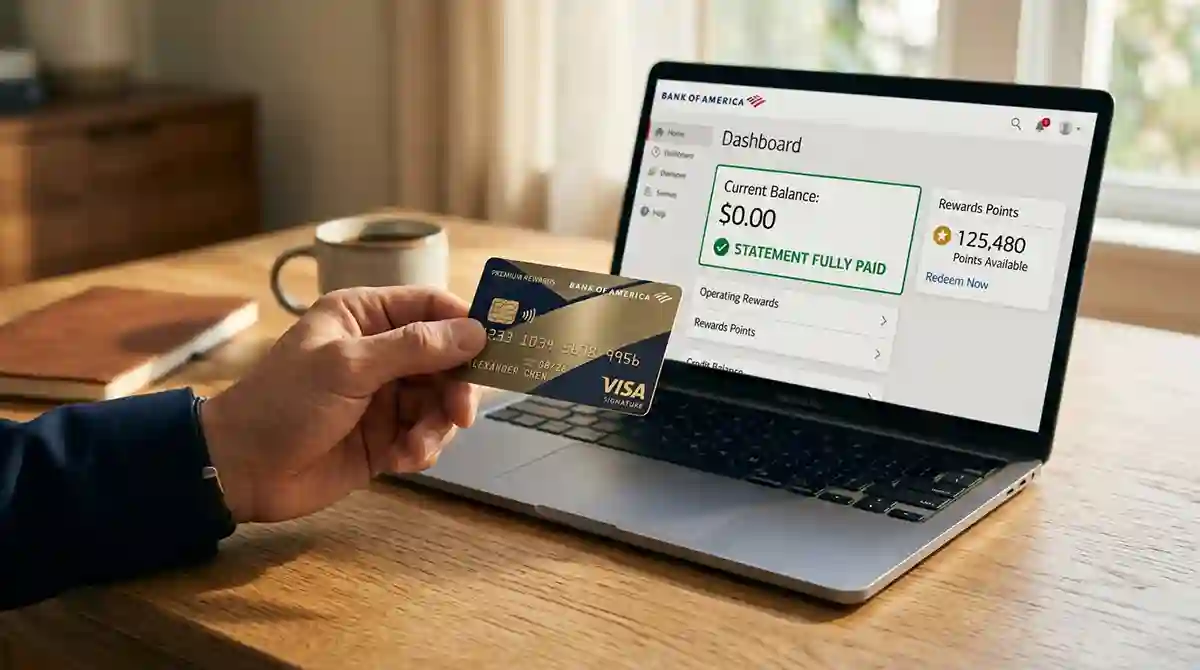
If you pay your full outstanding balance before the due date every month, you pay zero markup. The bank gave you an interest-free loan for the period between your purchase and your payment date, which is typically 30 to 55 days depending on your billing cycle. This is the grace period, and it is a genuinely useful feature if you use it correctly.
If you pay anything less than the full balance, markup begins to accrue on the entire outstanding amount, not just the unpaid portion, from the date of purchase. The markup rate on Pakistani credit cards can reach up to 3.5% per month, which is 42% annually. At this rate, a PKR 100,000 unpaid balance accumulates PKR 42,000 in interest charges over a single year before any new spending is added.
Pakistan’s credit card markup rates range from 36% to 45% annually. Any interest paid will instantly wipe out all reward value. The only Pakistanis who consistently benefit from credit cards are those who pay their full statement balance every month, every time.
That single sentence contains everything you need to know about using a credit card wisely in Pakistan.
The Real Cost of Minimum Payments
The minimum payment trap deserves its own section because it is genuinely one of the most financially damaging habits a Pakistani consumer can develop.
Banks set minimum payments at a low level deliberately. A typical minimum payment is around 5% of the outstanding balance or a flat PKR 500, whichever is higher. On a PKR 50,000 balance, your minimum payment might be PKR 2,500. That feels manageable. What most cardholders do not realize is that at a 42% annual markup rate, the monthly interest accruing on PKR 50,000 is approximately PKR 1,750. Your PKR 2,500 minimum payment is only reducing your actual debt by PKR 750 per month.
If you stopped spending on the card and paid only the minimum each month, it would take you years to clear a PKR 50,000 balance, and you would pay far more in total interest than the original balance itself.
The minimum payment is not a repayment plan. It is the bank’s way of keeping you in profitable debt for as long as possible. Treat it only as a last resort in genuine financial emergencies, not as a routine payment strategy.
Learn more: How to Build an Investment Portfolio in Pakistan
Understanding Your Credit Card Statement
Your monthly statement contains information that most cardholders ignore at their own financial cost. Understanding what each figure means puts you firmly in control.
Statement Date: The date your billing cycle closes and your statement is generated. All purchases made up to this date appear on this statement.
Payment Due Date: The date by which payment must reach the bank to avoid late payment fees and markup charges. This is typically 20 to 25 days after the statement date. Paying on or before this date and in full eliminates all markup for that cycle.
Minimum Amount Due: The minimum payment the bank requires. Paying only this triggers markup on your entire outstanding balance.
Total Amount Due: Your complete outstanding balance. Paying this in full by the due date is the only way to use a credit card without incurring markup.
Credit Limit: The maximum you are allowed to spend on the card in total at any given time.
Available Credit: Your credit limit minus your current outstanding balance. This is how much you can still spend before reaching your limit.
Reward Points Balance: The accumulated points from your spending, redeemable for the specific benefits your card offers.
You can video this video guide to learn more about Credit Cards in Pakistan.
Types of Credit Cards Available in Pakistan in 2026
Pakistan’s credit card market now offers more than 40 card options from over 10 banks, covering cashback, rewards, Islamic options, travel perks, annual fees, and eligibility for every major bank. Understanding the main categories helps you identify which type suits your spending habits.
Cashback Cards
Cashback cards return a percentage of your spending directly as credit to your account or as a statement reduction. They are the simplest rewards structure to understand because the value is straightforward: if you spend PKR 100 and the cashback rate is 1%, you get PKR 1 back. No redemption complexity, no expiring points.
The HBL Platinum card offers uncapped cashback on dining and travel alongside lounge access and travel insurance, making it one of the strongest all-round options in 2026 for eligible applicants.
Rewards Points Cards
Rewards cards accumulate points based on spending that can be redeemed for merchandise, vouchers, airline miles, or cashback. The earn rate is typically expressed as points per PKR 100 spent, and the redemption value varies by what you redeem for.
Spending earns airline miles, typically convertible to PIA Miles and More, Avios from British Airways, or other frequent flyer currencies. Premium cards from Bank Alfalah and HBL offer this for frequent travelers. Given Pakistan’s growing diaspora and business travel sector, miles cards are rapidly gaining popularity.
Travel Cards
Travel-focused cards offer airport lounge access, travel insurance, higher rewards on airline and hotel spending, and in some cases concierge services. HBL Platinum, Standard Chartered World, Meezan Visa Platinum, and Bank Alfalah Signature all include lounge access. These cards typically require higher minimum income levels and carry higher annual fees that can often be waived by meeting a spend threshold.
The HBL Platinum Credit Card offers 3x reward points on international spending, redeemable for flights, hotels, or cashback, along with a 0% installment plan for airline tickets.
Islamic Credit Cards
For borrowers who want to avoid riba entirely, Islamic credit cards provide an alternative where instead of charging markup on unpaid balances, the bank charges a fixed monthly service fee regardless of the balance carried. Islamic cards avoid markup entirely through a fixed monthly service fee. This structure is fundamentally different from a conventional card and is particularly useful for users who may occasionally carry a balance without incurring interest-based charges.
Meezan Bank Visa Platinum is among the most widely used Shariah-compliant credit cards in Pakistan in 2026, offering a competitive rewards structure alongside its Islamic financing principles.
Secured Credit Cards
Secured credit cards are backed by a fixed deposit placed with the bank. Your credit limit is typically equal to or a percentage above your deposit amount. Because the bank has your deposit as security, approval is much easier and credit history requirements are more lenient. This makes secured cards a practical option for freelancers, self-employed individuals, or first-time credit users who do not meet the salary requirements for a conventional unsecured card.
Annual Fees and How to Get Them Waived
Most credit cards in Pakistan charge an annual fee that varies significantly by card tier. Understanding the waiver conditions before applying can save you meaningful money.
Most premium cards in Pakistan have annual fees that can be waived by hitting a spend target. HBL Green requires only PKR 50,000 in annual spend to waive the PKR 6,500 fee. HBL Platinum requires PKR 500,000 in annual spend to waive the PKR 22,000 fee. If you can consistently hit the threshold, the card is effectively free.
Always check the annual fee waiver conditions when selecting a card. A card with a PKR 15,000 annual fee that can be waived by spending PKR 200,000 annually is effectively free for cardholders whose regular spending already approaches that level.
Hidden Charges Every Pakistani Cardholder Should Know
Beyond the annual fee and markup rate, credit cards in Pakistan carry several other charges that cardholders frequently encounter without fully understanding them.
Late Payment Fee
If you do not pay at least the minimum amount due by the payment due date, the bank charges a late payment fee. This is typically a flat amount or a percentage of the outstanding balance, and it also generates a negative entry on your ECIB credit record. Even one missed minimum payment has compounding consequences. Set up an automatic minimum payment standing instruction as a safety net against accidental late payments.
Cash Advance Fee
Withdrawing cash from an ATM using your credit card is one of the most expensive things you can do with it. Cash advance fees run roughly 3% to 4% at an ATM, with markup starting immediately and no grace period. Unlike regular purchases where you have a grace period before markup begins, cash advances start accruing charges from the moment of withdrawal. Avoid this entirely except in genuine emergencies.
Foreign Transaction Fee
Foreign transaction fees run roughly 3% to 4% on any purchase in a foreign currency, on top of the network rate, covering Netflix, Amazon, Spotify, and every USD-billed platform. If you regularly pay for international subscriptions or make purchases from foreign websites, this fee accumulates significantly over a year.
Over-Limit Fee
Spending beyond your credit limit triggers an over-limit fee. Most banks in Pakistan now contact you before approving transactions that would exceed your limit, but some card products allow over-limit spending and simply charge a fee for it afterward. Know your credit limit and monitor your available credit regularly.
How to Qualify for a Credit Card in Pakistan in 2026
Requirements vary by bank and product tier. Generally you need a valid ID, proof of income, and an existing bank relationship. Premium products may require higher minimum salary.
For a standard entry-level credit card, most banks require the following: a valid CNIC, a minimum monthly salary typically ranging from PKR 25,000 to PKR 50,000 depending on the bank and card tier, recent salary slips and bank statements showing salary credits, and a clean ECIB credit history with no defaults or unresolved missed payments.
For premium cards, you should be at least 21 years old if salaried or 25 if self-employed. A minimum monthly income of around PKR 100,000 is often expected for premium cards, though banks assess based on your overall profile.
Self-employed individuals and freelancers who do not have traditional payslips often find standard credit card applications difficult. The secured card route is the most practical path to credit card access for this category of applicant.
The 7 Habits of Wise Credit Card Users in Pakistan
These are the specific behaviors that separate people who genuinely benefit from credit cards from those who end up paying far more in interest than they ever received in value.
Pay the full statement balance every month without exception. This is the single most important habit. If you cannot commit to this as a non-negotiable practice, a credit card is likely to cost you more than it benefits you. Set up a standing instruction for the full amount if your bank supports it, or set a calendar reminder three to four days before your due date.
Never treat a credit card as additional income. A credit card is a short-term, interest-free loan on your existing income if used correctly. It is not additional purchasing power beyond what you earn. Spend only what you can comfortably repay from this month’s income.
Use one card well rather than multiple cards poorly. Multiple credit cards multiply the complexity of tracking balances, due dates, and total utilization. Starting with one card, used consistently and paid in full monthly, builds a clean credit history more effectively than juggling several cards at once.
Monitor your statements every month. Unauthorized transactions, incorrect charges, and processing errors do occur. Reviewing your statement every month before the due date catches these issues while you still have time to dispute them.
Keep your credit utilization below 30%. Using more than 30% of your credit limit consistently signals to lenders that you may be financially stretched. Keeping utilization lower positively influences your credit profile.
Use rewards intentionally, not as a justification to spend more. Banks like Standard Chartered and HBL periodically run bonus reward promotions such as double points on Daraz during Ramadan or extra cashback on dining in December. Subscribing to your bank’s SMS alerts ensures you never miss these opportunities. But rewards should be a bonus on spending you were going to make anyway, never a reason to spend beyond your means.
Never share your card details, PIN, or OTP with anyone. Credit card fraud in Pakistan is increasingly sophisticated. Your card number, CVV, expiry date, and OTP together give a fraudster complete access to your credit line. Banks will never call asking for these details.
Credit Cards vs Debit Cards: When to Use Which
Many Pakistanis use their debit card for everything out of habit or caution. Understanding when a credit card is the genuinely better choice helps you capture value you would otherwise leave on the table.
Use a credit card when shopping online, particularly on international platforms, because credit cards offer stronger fraud protection and dispute resolution rights than debit cards. Use a credit card for large planned purchases where your bank offers 0% installment plan conversion, spreading the cost without paying markup. Use a credit card for recurring bills you always pay, capturing rewards on spending you are going to make regardless. Use a credit card when traveling internationally for better acceptance, fraud protection, and to earn travel rewards.
Use your debit card for ATM cash withdrawals, for spending in environments where you are less confident about security, and whenever the discipline of spending your own money directly rather than borrowed money is important for your personal financial management.
Islamic Credit Cards: A Genuine Alternative
For Muslims who want to avoid riba entirely, Islamic credit cards represent a genuinely different financial product, not just a conventional card with an Islamic label.
The key structural difference is how the cost of carrying a balance is handled. Conventional cards charge markup at up to 42% annually on unpaid balances. Islamic cards use a fixed monthly service fee structure that applies regardless of your balance. This means the cost of using an Islamic card is predictable and does not compound the way conventional card interest does.
Meezan Bank and the Islamic banking windows of HBL, Bank Alfalah, and others all offer Shariah-compliant credit card products in 2026 with competitive reward structures and full functionality including international acceptance, lounge access on premium tiers, and online payment capability.
If the riba structure of conventional credit cards is a concern for you, Islamic credit cards are a fully functional alternative that does not require compromising on the practical features you want from a card.
Key Takeaways
Credit cards in Pakistan in 2026 offer genuine value to cardholders who understand how they work and use them with discipline. The rewards, the payment convenience, the fraud protection, and the interest-free grace period are all real benefits for users who pay their full balance every month.
For users who carry balances month to month, the markup rates of 36% to 45% annually make credit cards one of the most expensive forms of borrowing available in Pakistan. No rewards programme, no matter how generous its marketing, provides value that remotely compensates for interest charges at those rates.
The credit card itself is neither good nor bad. It is a tool, and like any tool, its impact depends entirely on how it is used. Pay in full every month, spend within your actual means, understand every charge on your statement, and a credit card becomes a useful and genuinely rewarding part of your financial toolkit.
Carry a balance month after month, pay only the minimum, and the same card becomes an expensive burden that quietly erodes your financial stability one markup charge at a time.
The choice between those two outcomes is made not when you apply for the card but in how you manage it every single month.
This article is for educational and informational purposes only. Credit card markup rates, fees, rewards structures, and eligibility criteria vary by bank and product and are subject to change. Always read the full Schedule of Charges and Key Fact Sheet for any card before applying. Verify current terms directly with your bank.