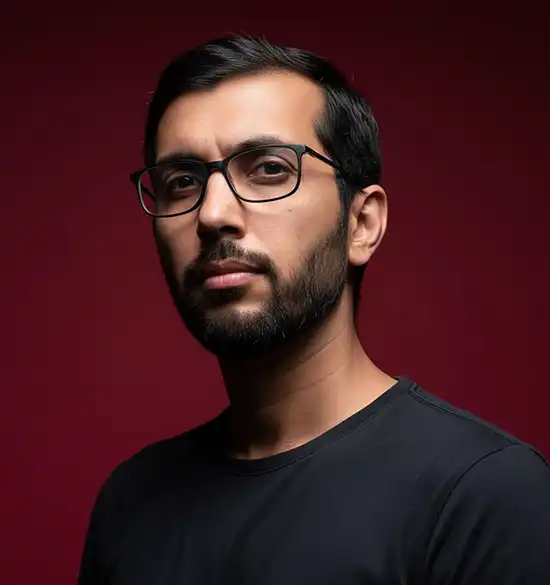
On August 25, 2026, Fatima Gobi Ventures achieved something no Pakistani venture capital firm had ever done before: it became the country’s first VC to back a genuine unicorn. Fasset, a fintech infrastructure company co-founded by Lahore-born Daniel Ahmed, reached a 1 billion dollar valuation through a 119 million dollar Series C round led by Japan’s SBI Group, five years after Fatima Gobi co-led its early Series A. It is a genuinely landmark moment for Pakistan’s startup ecosystem, and it is also, honestly, the exception rather than the rule. This article explain you about how to raise startup funding in Pakistan.
The harder number, from i2i Ventures’ own 2024 Pakistan Startup Ecosystem Report and separately confirmed by Karandaaz’s research, is that more than 80 percent of Pakistani startups close within their first three years, with some industry estimates putting first-two-year failure closer to 90 percent, broadly in line with global startup failure patterns. This guide is written with both numbers in view: it covers exactly how Pakistan’s equity funding ecosystem actually works, from non-dilutive grants through to venture capital, without pretending the funding conversation alone determines whether a startup succeeds.
Table of Contents
Equity Financing vs the Bank Loan Route
Before I jump into How to Raise Startup Funding in Pakistan, you need to understand equity financing vs the bank loan route. Before covering the specific funding sources, it is worth being clear about the fundamental trade-off this article’s funding model represents, genuinely different from the bank loan and personal loan financing covered elsewhere in this series. A bank loan, whether the SME or personal financing options covered in the business loan article in this series, must be repaid with markup regardless of whether your business succeeds, but it does not require giving up any ownership of the company.
Equity financing, the model this article covers, involves exchanging a genuine ownership stake, and therefore a share of future profits and decision-making influence, for capital you are not contractually obligated to repay if the business fails.
Neither is inherently better; they suit fundamentally different situations. A business with predictable revenue and collateral is often better served by debt financing. A pre-revenue technology startup with no collateral and genuine uncertainty about its own survival, the exact profile most VCs are built to fund, is typically not bankable through conventional debt at all, which is precisely why the equity ecosystem covered in this article exists as a separate financing track.
The Realistic Funding Ladder
Most successful Pakistani startup fundraising follows a genuinely sequential path, and attempting to skip straight to venture capital without validation is one of the most consistently cited reasons early pitches fail.
Step 1: Non-dilutive government grants first. Before giving up any equity, genuinely explore programs including IGNITE, the National Incubation Center, and provincial IT board initiatives, since this capital comes with no ownership cost at all.
Step 2: Accelerator programs, including Plan9, NIC, i2i’s own accelerator track, and international programs like Founder Institute’s Pakistan chapter, which combine a modest seed investment with structured mentorship and, critically, warm introductions to the angel and VC network covered next.
Step 3: Startup competitions, including MIT Enterprise Forum Pakistan and Shell LiveWIRE, which provide both non-dilutive prize capital and genuine visibility within the ecosystem.
Step 4: Build a lean MVP with this early capital, and generate real, even modest, traction, since the investors covered below are consistently looking for evidence of genuine market interest rather than an idea alone.
Step 5: Approach angel investors, typically through warm introductions from your accelerator network rather than cold outreach, for the earliest genuinely dilutive capital.
Step 6: Pitch local and regional VCs once you have real traction to show.
Step 7: Consider international programs, including Y Combinator, Antler, and Google for Startups, once your business has demonstrated enough traction to be competitive at that level.
Pakistan’s Active Venture Capital Firms
| VC Firm | Typical Stage | Typical Cheque Size | Sector Focus |
|---|---|---|---|
| Walled City Co. | Pre-seed | $10,000 – $100,000 | All sectors |
| i2i Ventures | Pre-seed to seed | $25,000 – $250,000 | Impact-driven, women-led, tech-enabled; increasingly offering hybrid debt-plus-equity structures |
| Zayn VC | Pre-seed to seed | $100,000 – $500,000 | Fintech, SaaS, logistics |
| Sarmayacar | Seed to Series A | $250,000 – $2 million | Broad tech sector; Pakistan’s largest VC fund dedicated specifically to technology |
| Fatima Gobi Ventures | Seed to Series A | $500,000 – $3 million | Tech-enabled businesses; joint venture between Fatima Group and Asia’s Gobi Partners |
| Lakson Investments | Growth stage | Larger, later-stage cheques | Broad, later-stage focus |
What each firm actually looks for, in their own stated terms, is worth knowing before you pitch. Sarmayacar has specifically noted valuing coachability, founders who can adapt, learn, and iterate quickly, over founders who arrive with a fixed, unchangeable plan. Zayn VC has stated it looks beyond surface-level traction toward real-world adoption, regulatory feasibility, and genuine social scalability, meaning a startup solving a real structural problem is a stronger fit for their thesis than one addressing a marginal convenience gap. i2i Ventures has moved further into hybrid debt-plus-equity structures through 2026, a genuinely notable shift worth understanding if you want to minimize dilution while still accessing meaningful capital.
Government-Backed Non-Dilutive Capital
Before approaching any equity investor, the non-dilutive route deserves serious attention, since it requires giving up no ownership at all.
The Pakistan Startup Fund (PSF) offers non-dilutive grants of up to 300,000 dollars per VC investment round, effectively co-investing alongside qualifying private VC rounds rather than competing with them, meaning a strong VC term sheet can itself become the trigger for accessing this government capital.
The National Incubation Center provides seed funding of up to PKR 10 million per qualifying startup, alongside the incubation and mentorship support structure.
The Punjab Information Technology Board’s Plan9 program has, as of March 2025, graduated over 1,100 startups through its incubation programs, collectively generating Rs 2.9 billion in revenue and creating approximately 24,000 jobs, a genuinely substantial track record for a government-run incubation initiative.
SECP has also introduced a Regulatory Sandbox and its LEAP program, alongside a simplified five-year tax and compliance framework specifically for registered startups, reducing the regulatory burden covered in the tax filing and business registration articles elsewhere in this series during a startup’s most fragile early years.
Sector Focus: Where the Money Is Actually Going
Fintech, healthtech, and agritech consistently attract the most active investor interest in Pakistan’s current market. Farmdar, an agritech startup applying AI and space technology to agricultural productivity, secured what was reported as Pakistan’s first Silicon Valley pre-Series A investment in this specific category, illustrating that sector focus genuinely shapes which Pakistani startups are finding the most investor traction internationally as well as domestically.
The Honest Reality: Why Most Pitches Fail Before Funding Is Even the Question
This is the section most funding guides skip, and it is arguably the most important one for a genuinely useful article rather than an overoptimistic one. The consistently cited reason early-stage pitches fail, across multiple Pakistani startup ecosystem reports, is not poor pitch delivery but raising too early, before any genuine validation exists.
Investors, as Sarmayacar and Zayn VC’s own stated criteria above make clear, are looking for evidence that someone beyond the founding team genuinely cares about the problem being solved, whether that is paying customers, a signed letter of intent, or measurable usage, not simply a well-designed slide deck describing a promising idea.
With over 80 percent of Pakistani startups closing within three years, and Careem’s own suspension of its Pakistan operations in July 2025 serving as a sobering reminder that even well-funded, internationally backed companies are not immune to this pattern, the responsible framing for any founder reading this article is that securing funding is a milestone within a genuinely difficult survival trajectory, not a guarantee of eventual success.
The startups that do succeed, Fasset’s path to a billion-dollar valuation among them, are consistently the ones that built genuine traction and iterated on real customer feedback before, not instead of, seeking capital.
Common Mistakes Pakistani Founders Make When Raising Funding
Approaching VCs before any genuine market validation exists, exactly the “raising too early” pattern identified as the single most common reason pitches fail across multiple ecosystem reports.
Skipping the non-dilutive grant and accelerator stages entirely, giving up meaningful equity earlier and at a lower valuation than necessary when genuinely free or accelerator-linked capital was available first.
Not researching a specific VC’s actual thesis and stated criteria before pitching, sending a generic pitch to a fintech-focused fund like Zayn VC when the business itself has no genuine fintech relevance, wasting both the founder’s and the investor’s time.
Treating a funding round as validation of the business itself rather than validation of the pitch and the team, losing sight of the honest failure-rate reality described above and consequently under-investing in the operational discipline, covered throughout the business finance and pricing articles in this series, that actually determines survival after the capital is raised.
Ignoring the debt-versus-equity trade-off entirely, defaulting to equity financing without genuinely comparing it against the SME loan and personal loan options covered elsewhere in this series, when a business with predictable revenue might be better served, and retain more ownership, through debt instead.
Conclusion
Pakistan’s startup funding ecosystem in 2026 is genuinely more developed than it was even a few years ago, with named, active VC firms writing real cheques across every stage from pre-seed through Series A, government-backed non-dilutive capital through PSF and NIC, and a landmark unicorn outcome in Fasset demonstrating the ceiling is genuinely real. It is also, honestly, an environment where the overwhelming majority of startups that raise funding will not survive to see anything resembling that outcome.
The founders who navigate this successfully are consistently the ones who follow the funding ladder in order, non-dilutive capital first, genuine validation before any VC pitch, and a realistic understanding of what each specific investor is actually looking for, rather than treating funding itself as the finish line. Fasset’s founders built a real business for years before Fatima Gobi’s early conviction paid off. That sequence, traction first, capital second, is the pattern worth learning from far more than the eventual headline number.
Further reading and official sources:
- Securities and Exchange Commission of Pakistan: Regulatory Sandbox and startup registration framework secp.gov.pk
- Pakistan Startup Fund: non-dilutive grant eligibility and application psf.gov.pk
- National Incubation Center: seed funding and incubation programs nic.org.pk