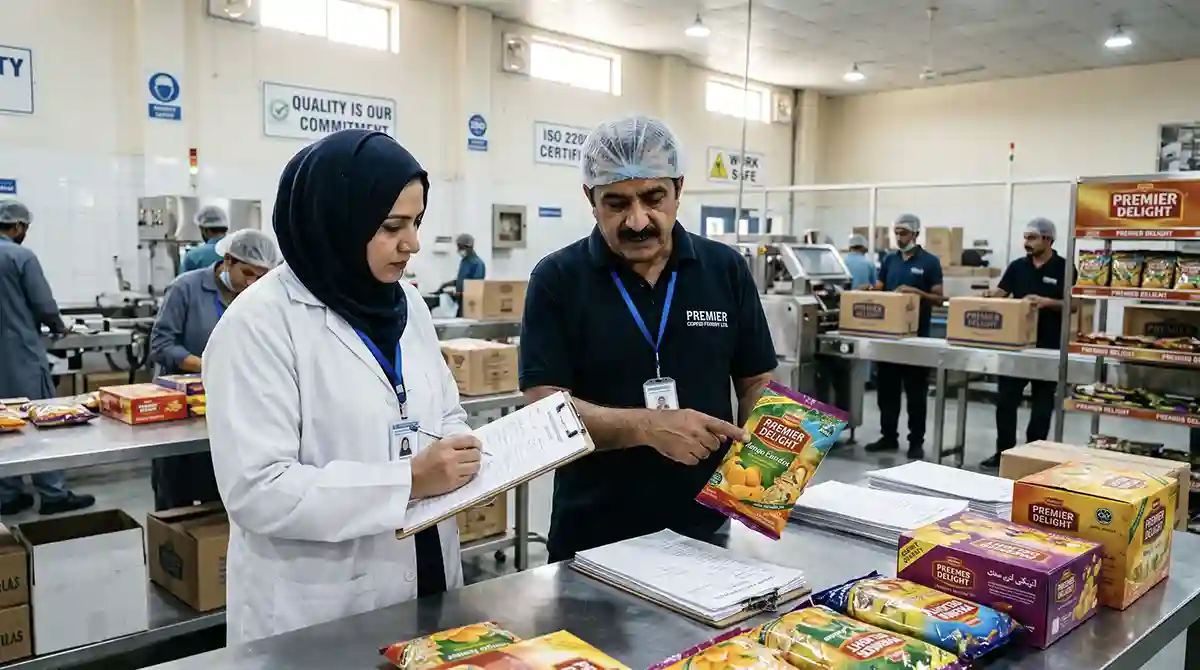
A small food manufacturer in Sialkot I know of had been exporting confectionery to buyers in the UAE for over a year through informal trust built product batch by product batch, when a larger Gulf retailer finally expressed serious interest in a standing order. The retailer’s first question was not about pricing or delivery timelines. It was whether the product carried halal certification from a body recognized by the Gulf Accreditation Center. Without it, the conversation simply could not proceed, regardless of how good the product itself was. This article will explain the halal certificate for Pakistani businesses in 2026.
This is the practical reality behind halal certification for Pakistani businesses in 2026: it is not primarily a religious formality layered on top of an already Muslim-majority domestic market, but a specific, verifiable credential that international buyers, particularly across the Gulf, require before they will do business at all. This guide covers exactly how the certification system in Pakistan works, the genuinely major fee change introduced this year, and how to actually get certified.
Table of Contents
What Halal Certification Actually Verifies
Before deep diving into Halal Certification for Pakistani Businesses in 2026, you must know what halal certificate actually verifies. The Halal certification confirms that a product contains no haram, forbidden, ingredients, and that it has been produced, processed, and packaged in accordance with Islamic guidelines, alongside meeting the underlying cleanliness, safety, and hygiene standards the certification process reviews at every stage, from raw material sourcing through processing, packaging, labeling, and traceability.
For animal-based food products specifically, the process also validates that slaughtering methods meet halal requirements. The certification’s scope extends well beyond food alone, covering feed, leather, cosmetics, catering services, pharmaceuticals, and nutraceuticals.
A common misconception worth correcting directly: halal certification is not simply a self-declared label a business can print on its own packaging based on its own assessment. It is issued by a formally recognized certification body following a structured audit process, and for it to carry genuine weight, particularly in export markets, that certification body itself needs to be recognized by the relevant regulatory framework, a distinction covered in detail below.
The Legal and Regulatory Structure
Pakistan’s halal certification framework operates on a two-tier structure worth understanding clearly, one that mirrors, in principle, the federal-versus-provincial regulatory split covered in the government procurement article in this series.
The Pakistan Halal Authority (PHA), established under the Pakistan Halal Authority Act 2016 (Act VIII of 2016), is the country’s federal statutory authority with the legal mandate to determine the halal status of products nationally. Importantly, PHA’s core role is not necessarily to certify every individual product itself, but to develop policy, authorize the use of the Halal logo, and register and recognize Local Halal Certification Bodies (LHCBs), the actual private and provincial certifying organizations that conduct audits and issue certificates to individual businesses.
The Punjab Halal Development Agency (PHDA), established under Punjab’s own Halal Development Agency Act 2016, operates as a provincial body and holds a particularly significant distinction: it is the only public-sector halal certification body in Pakistan accredited by the Pakistan National Accreditation Council (PNAC) and recognized by Malaysia’s JAKIM, one of the world’s most respected halal certification authorities.
Beyond these public bodies, several PHA-recognized private certification bodies actively certify Pakistani businesses, including SANHA, HRC, and USB Certification, among others registered under PHA’s Local Halal Certification Bodies scheme.
The Major 2026 Development: Certification Fees Have Changed Significantly
This is genuinely important and current news for any Pakistani business considering certification this year. At its 6th Board of Governors meeting in 2026, chaired by the Federal Minister for Science and Technology, PHA formally launched its Halal Certification Mark Scheme and, alongside it, approved a significant fee revision: zero certification fees for halal food and non-food items being exported from Pakistan, alongside a 50 percent fee reduction for local, domestically sold food items. This move is explicitly framed as aligning with the Prime Minister’s ease of doing business and export promotion agenda, and represents a genuinely substantial reduction in the cost barrier for a small business considering certification specifically for export purposes.
Step-by-Step: How to Get Halal Certified
Step 1: Determine your target market first, since this shapes everything else. Domestic halal certification in Pakistan is treated by some accounts as effectively voluntary outside specific regulated categories, while export to markets including Saudi Arabia, Malaysia, and Indonesia typically requires certification as a genuine market-entry precondition, and Gulf Cooperation Council markets specifically require certification from a body recognized by the Gulf Accreditation Center. Given this genuine variation in how strictly certification is treated depending on your specific market, confirming the exact requirement for your target destination directly, rather than assuming a single blanket rule applies everywhere, is the right starting point.
Step 2: Choose your certification body based on where you intend to sell. If your target market is the GCC specifically, verify directly, through the relevant government portal, that your chosen certification body is accredited by the Gulf Accreditation Center or directly recognized by the importing country’s own national halal authority; a certification from a body not recognized in your specific destination market risks shipment rejection regardless of the certificate’s validity within Pakistan itself. If Malaysia or Southeast Asia is your target, PHDA’s JAKIM recognition specifically makes it a genuinely strong choice.
Step 3: Prepare your documentation and facility for audit. This includes your full ingredient list and sourcing documentation, your production process flow, packaging and labeling materials, and, for any animal-based products, documentation of your slaughtering and sourcing practices.
Step 4: Undergo the certification body’s audit process, which reviews every stage from raw material sourcing through final packaging, verifying compliance with the applicable halal standard, commonly OIC/SMIIC 1:2019 for Pakistan and the broader Central Asian and Turkish market context, or the specific standard your target export market requires, such as MS 1500:2019 for Malaysia and Singapore, or GSO 2055-1:2015 for Gulf markets.
Step 5: Receive your certificate and authorized use of the Halal logo, valid for a defined certification period, after which renewal through a follow-up audit is required to maintain your certified status.
Realistic timeline: the overall process, from initial application through certificate issuance, commonly takes six to eight weeks, though this varies based on the number of products and facilities involved, your specific target export countries, and how quickly your required documentation and audit scheduling can be completed.
Why This Matters Beyond Religious Compliance Alone
With over 95 percent of Pakistan’s own population Muslim, domestic consumer trust is a genuine benefit of certification even where it is not strictly mandated for a specific product category. But the more commercially decisive benefit, as the confectionery manufacturer in the opening story discovered directly, is export market access.
The Gulf Cooperation Council represents one of the world’s fastest-growing halal food markets, and Pakistan’s own trade infrastructure with these markets, including the kind of trade corridor development discussed in Pakistan-Qatar and broader GCC trade initiatives through 2026, makes proper, internationally recognized certification an increasingly central requirement for any Pakistani business genuinely serious about export growth in this direction, connecting directly to the broader exporting framework covered in the export article earlier in this series.
Common Misconceptions and Mistakes
Assuming any halal-labeled certificate is equally valid everywhere. As explained above, GCC markets specifically require Gulf Accreditation Center recognition, and a certificate valid domestically or in one export market does not automatically transfer credibility to another; always verify against the specific destination market’s own recognized body list.
Treating halal certification as a simple self-declaration rather than an audited, third-party process. Genuine certification requires a structured audit against a recognized standard, not merely printing a halal claim on packaging based on an internal, unverified assessment.
Not accounting for the 2026 fee changes before assuming certification is prohibitively expensive. With export certification fees now eliminated entirely and domestic food certification fees reduced by half, the cost barrier that may have discouraged a small business previously has changed substantially this year, and reassessing that calculation is genuinely worthwhile.
Choosing a certification body based on cost or convenience alone without checking its recognition in your specific target export market. A cheaper or more locally convenient certifier that is not recognized by your buyer’s country’s own halal authority risks the exact scenario the confectionery exporter narrowly avoided by checking in advance.
Letting certification lapse without renewal, assuming a one-time certificate provides permanent status, when in reality certification requires periodic renewal through follow-up audits to remain valid and to maintain authorized use of the Halal logo.
Conclusion
Halal certification for a Pakistani business in 2026 is genuinely more accessible than it has been, with export certification fees now eliminated entirely and domestic food certification costs halved under PHA’s newly launched Certification Mark Scheme. What has not changed is the importance of choosing the right certification body for your specific target market, since a certificate’s practical value lies entirely in whether the buyer or country you are selling to actually recognizes the body that issued it.
For the small food manufacturer in the opening story, and for any Pakistani business with genuine export ambitions toward the Gulf, Malaysia, or other halal-conscious markets, certification is not a bureaucratic afterthought but a specific, verifiable credential worth securing properly, from a properly recognized body, well before that decisive first conversation with a serious international buyer arrives.
Further reading and official sources:
- Pakistan Halal Authority: Halal Certification Marks Regulations 2021 and registered Local Halal Certification Bodies: pha.gov.pk
- Punjab Halal Development Agency: PNAC and JAKIM-recognized certification: phda.punjab.gov.pk