
SIP vs. Lump Sum Investment Planner
Compare recurring monthly deposits with a one-time lump sum growth
| Year | SIP Invested | SIP Value | Lump Sum Value |
|---|
How to Use the SIP vs. Lump Sum Planner
SIP vs Lump Sum Calculator is a very important for every new investor. Every investor faces the same core dilemma: is it better to invest a large lump sum all at once, or spread out the money through steady monthly deposits? This planner models both strategies side by side under identical market conditions.
Here is how to get the most out of this tool:
- Pick Your Currency: Use the toggle in the upper right to switch between USD ($) and PKR (Rs).
- Set Your Monthly SIP Contribution: Enter the recurring amount you want to set aside each month. Systematic Investment Plans (SIPs) work best when set to auto-debit on salary day.
- Enter an Optional Lump Sum Amount: Enter the single cash deposit you have available right now to see how it grows without adding another penny.
- Input Expected Annual Return: Enter your targeted annual growth rate. Broad equity index funds (such as the S&P 500 or KSE-100) historically target between 10% and 15% over multi-year cycles, whereas fixed-income mutual funds yield steady single digits.
- Review the Comparison & Yearly Table: Instantly compare the total invested capital, total profit, and wealth multipliers side by side, or open the Year-by-Year Comparison Table to track growth milestones.
SIP vs. Lump Sum: Which Strategy is Better?
Neither strategy is universally superior; the right choice depends on your cash flow and market conditions.
Systematic Investment Plan (SIP)
A SIP involves investing a fixed dollar or rupee amount at regular intervals (typically monthly).
- Rupee/Dollar-Cost Averaging: When market prices drop, your fixed monthly allocation automatically buys more fund units or shares. When prices peak, it buys fewer. Over time, this smooths out volatility and lowers your average purchase price.
- Removes Emotional Timing: You do not need to guess when the market has hit a bottom.
- Ideal for Salaried Earners: It aligns naturally with monthly income streams.
Lump Sum Investing
Lump sum investing means deploying your entire available capital on day one.
- Maximum Time in the Market: Because markets trend upward over long horizons, putting all your capital to work immediately allows 100% of the funds to begin compounding from day one.
- Higher Psychological Volatility: If the market enters a downturn immediately after you invest, you will experience an immediate paper loss that can test your patience.
- Ideal for Windfalls: Works best for annual company bonuses, asset sales, or inheritance capital.
The Mathematics Behind SIP and Lump Sum Growth
1. Lump Sum Compound Formula
Since lump sum money is deposited once and left to compound:

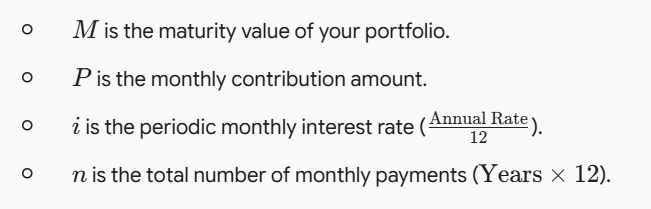
Where $P$ is the starting amount, $r$ is the annual rate of return, and $t$ is the number of years.2. Systematic Investment Plan (SIP) Formula Because each monthly installment is invested for a different duration, SIP returns follow an annuity due formula:

Where:
Real-World Comparison: Monthly SIP vs. Lump Sum
The table below illustrates how different capital structures perform over 10 years at a 12% annual return rate:
| Strategy | Out-of-Pocket Capital | Monthly Deposit | Annual Growth | Time Horizon | Total Invested | Final Portfolio Value | Total Net Profit |
| Disciplined SIP | $0 Initial | $300 / Month | 12% | 10 Years | $36,000 | $69,702 | +$33,702 |
| Patient Lump Sum | $10,000 Initial | $0 / Month | 12% | 10 Years | $10,000 | $31,058 | +$21,058 |
| PKR Wealth Builder | Rs 0 Initial | Rs 25,000 / Month | 15% | 10 Years | Rs 3,000,000 | Rs 7,015,000 | +Rs 4,015,000 |
FAQs
Can I pause or stop an active SIP anytime?
Yes. Unlike traditional life insurance plans or locked endowment schemes, open-ended mutual fund SIPs carry no penalties for pausing, modifying, or cancelling your monthly instructions.
What happens if I miss a monthly SIP installment?
If your linked bank account lacks sufficient balance on deduction day, the mutual fund provider simply skips that month's purchase. No fine is charged by the fund manager, though your bank may levy a standard auto-debit bounce fee.
Is SIP safer than investing all at once?
SIP is significantly safer from a psychological and volatility standpoint. By staggering purchases over months or years, you eliminate the risk of investing all your money right before a severe market drop.
I hope this SIP vs Lump Sum Calculator will be helpful for you. In your investment journey you should also check the compound interest calculator as well.